
Why Depreciation Is the Cost Nobody Talks About
When people shop for a car, they focus on the monthly payment or the sticker price. Depreciation rarely comes up — yet for most drivers, it represents a larger financial impact than fuel, insurance, or maintenance combined over the years they own the vehicle.
Unlike a house, which may appreciate in value over time, a car begins losing value the moment it leaves the lot. That loss is inevitable and continuous. The question isn't whether your car will depreciate — it's by how much, and how fast.
Understanding this dynamic changes how you evaluate a vehicle. A car that costs less to buy but drops in value quickly can cost more to own than a pricier option that holds its value well. That's the core insight: the purchase price tells you what you're paying today; depreciation tells you what you're actually spending over time.
For a fuller picture of ownership costs, see total cost of ownership.
15–25%
Average new car value lost in year one
Industry data from automotive valuation organizations consistently shows the first year carries the steepest depreciation drop.
~50%
Average value lost over five years
Many vehicles lose roughly half their original purchase price by the five-year mark, making depreciation a major long-term ownership cost.
#1
Largest ownership cost for most drivers
According to AAA's annual driving cost studies, depreciation consistently ranks as the single largest expense of vehicle ownership, exceeding fuel and insurance.
How Depreciation Actually Works
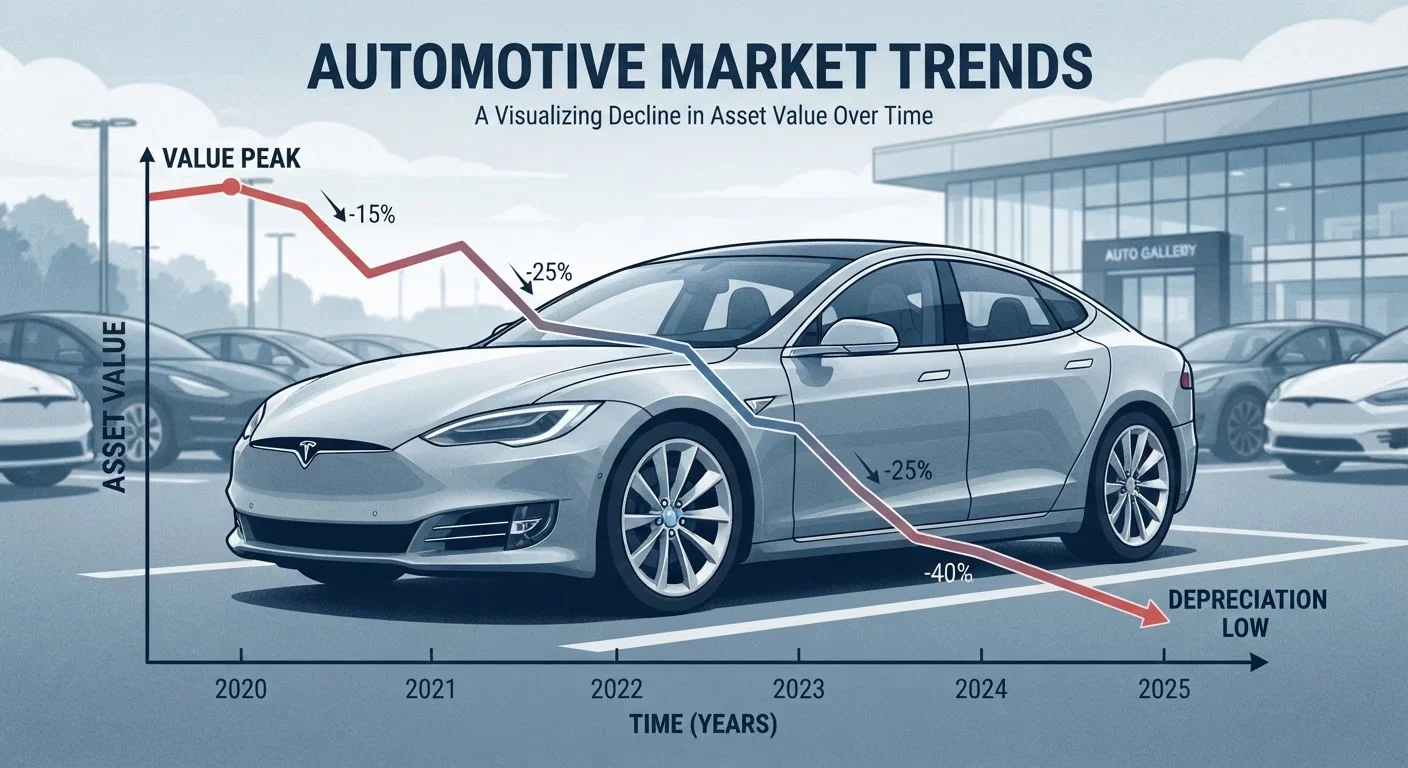
Depreciation isn't linear. A new car typically loses value fastest in its early years, then the rate slows. The first year is the most dramatic — studies from automotive valuation organizations suggest average new vehicles lose between 15% and 25% of their value in year one. By the end of five years, many vehicles have lost 40–60% of their original purchase price.
Several factors influence how quickly a particular vehicle depreciates:
- Brand reputation and reliability perception: Vehicles known for long-term dependability tend to hold value better in the used market.
- Supply and demand: If a model is popular and supply is limited, resale prices hold up. Vehicles that pile up on dealer lots tend to fall faster.
- Fuel type and efficiency: As fuel prices shift or technology changes, demand for certain powertrains can affect resale values.
- Condition and mileage: A well-maintained vehicle with average mileage will always outperform a neglected one of the same year and model.
- Vehicle segment: Trucks and SUVs have historically retained value better than sedans in the U.S. market, though this varies by era and economic conditions.
New vs. Used: The Depreciation Angle
Buying new means absorbing that first-year value drop yourself. The moment you register the vehicle and drive away, it's now a used car — and priced accordingly on the open market. For some buyers, the benefits of new (full warranty, latest safety features, financing incentives) justify that cost. For others, it's worth asking: does someone else absorb the steepest part of the drop?
A vehicle that is two to three years old has typically passed its sharpest depreciation curve. The original buyer took the biggest hit, and you can often purchase a gently used example at a meaningfully lower price while still getting a relatively modern, low-mileage vehicle. This is one reason certified pre-owned programs attract buyers who want a balance of value and peace of mind.
None of this means used is always the right call. It means depreciation is a variable worth factoring in alongside purchase price, financing terms, and how long you plan to keep the vehicle.
What You Can Do With This Information
You don't need to predict the future of resale markets to benefit from understanding depreciation. A few practical habits can make a real difference:
- Research resale value before you buy. Automotive valuation tools — such as those provided by Kelley Blue Book or Edmunds — publish historical and projected depreciation data by make and model. Reviewing this before purchase gives you a clearer sense of long-term cost.
- Think about how long you'll keep the vehicle. If you plan to sell in two or three years, buying a vehicle known for slow depreciation matters more. If you're driving it for ten years or more, early depreciation is less relevant — the car will be low in value either way at the end.
- Watch out for being underwater on a loan. If you finance a vehicle that depreciates faster than you're paying it down, you can owe more than it's worth. A larger down payment or a shorter loan term reduces that risk.
- Don't let depreciation be the only factor. A vehicle that fits your needs and gets maintained well is still a sound choice even if it doesn't top the resale-value charts.
For more on how common assumptions can cost buyers money, see car-buying myths worth knowing before you sign anything.