
Choosing the Right Tank Size
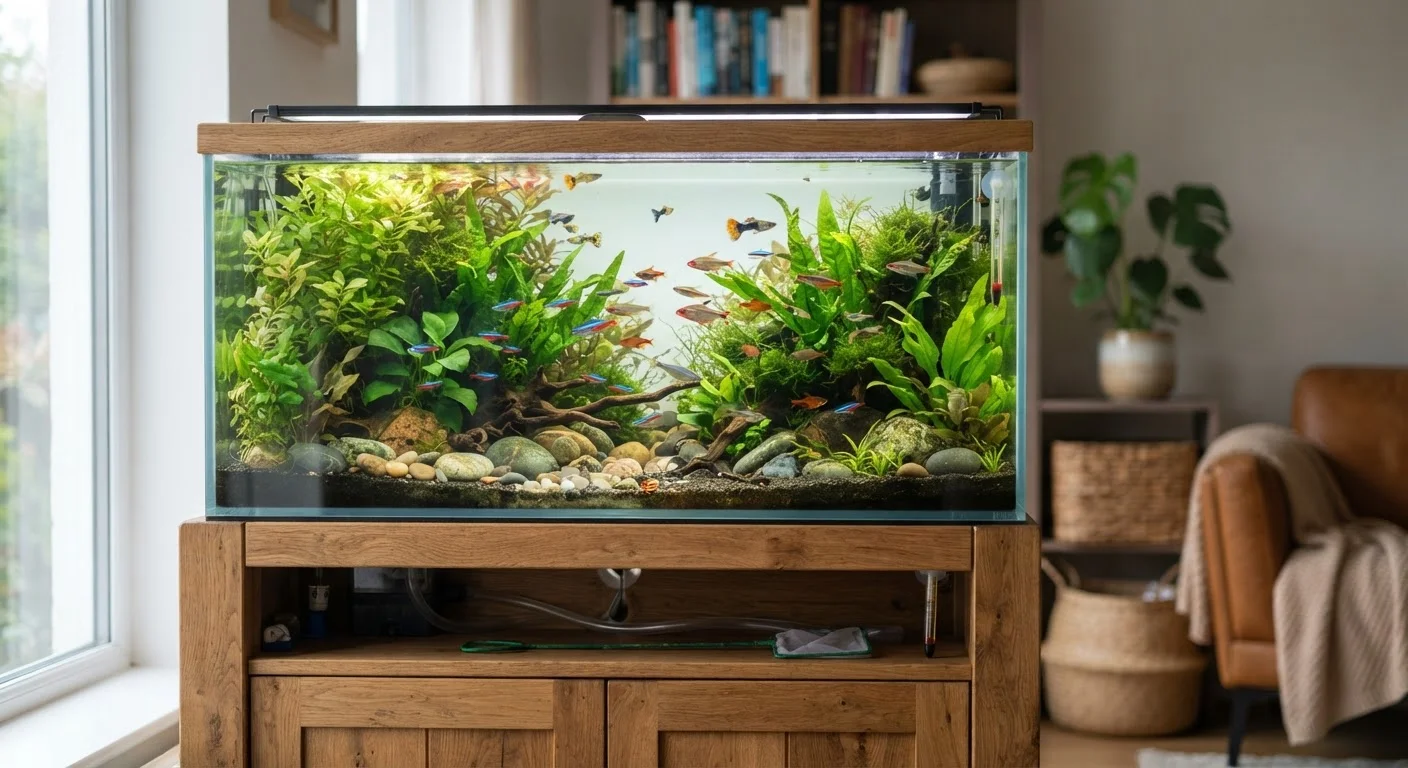
It might seem logical to start small, but a 10-gallon tank is actually harder to manage than a larger one. In a small volume of water, temperature swings and chemical imbalances happen faster, leaving little margin for error. Most aquarium keepers recommend beginners start with a 20-gallon tank as a reliable baseline — it's stable enough to be forgiving without being overwhelming to maintain.
Before buying anything, decide where the tank will live. A full 20-gallon aquarium weighs roughly 225 pounds, so it needs a flat, sturdy surface away from direct sunlight (which encourages algae growth) and heating vents. Once the tank is filled, it won't be easy to move.
Nitrogen cycle
The natural process by which beneficial bacteria break down harmful ammonia from fish waste into less toxic compounds. Establishing this cycle before adding fish is essential for a healthy tank.
Ammonia
A toxic chemical produced by fish waste, decaying food, and dead plant matter. High ammonia levels are the most common cause of fish death in new tanks.
Nitrite
An intermediate compound produced when bacteria process ammonia. It is also toxic to fish and should read zero in a fully cycled, healthy aquarium.
Nitrate
The relatively harmless end product of the nitrogen cycle. It accumulates over time and is controlled through regular partial water changes.
Substrate
The material — gravel, sand, or specialized soil — that lines the bottom of an aquarium. It provides a surface for beneficial bacteria and anchors plants.
Dechlorinator
A liquid water conditioner that neutralizes chlorine and chloramines in tap water, making it safe for fish. It should be added every time new water is introduced to the tank.
Essential Equipment You'll Need
Setting up a functional aquarium requires a handful of core components working together. Here's what every beginner tank needs:
- Filter: Removes waste and houses the beneficial bacteria that keep water safe. Choose one rated for your tank size or slightly larger.
- Heater: Required for tropical fish. Look for an adjustable submersible heater and pair it with a thermometer to verify the temperature.
- Lighting: Standard LED aquarium lights support plant growth and display your fish well. Aim for 8–10 hours of light per day using a timer.
- Substrate: Gravel or sand covering the bottom provides a natural environment and anchors live or artificial plants.
- Water conditioner: Essential for neutralizing chlorine and chloramines in tap water before it goes into the tank.
- Test kit: A liquid-based test kit lets you measure ammonia, nitrite, nitrate, and pH — the four parameters that determine whether your water is safe for fish.
Décor like driftwood, rocks, and plants aren't just decorative — they provide hiding spots that reduce fish stress and encourage natural behavior.
Cycling Your Tank Before Adding Fish
This step is the one most beginners skip, and it's the most consequential. Cycling refers to establishing a colony of beneficial bacteria in your filter that convert toxic ammonia (from fish waste and uneaten food) first into nitrite, then into the far less harmful nitrate. Without these bacteria, ammonia builds up quickly and can kill fish within days.
To cycle a new tank, add a small source of ammonia — fish food, pure ammonia drops, or a hardy starter fish — and test your water every few days. You'll see ammonia spike, then nitrite rise and fall, and finally nitrate accumulate. When ammonia and nitrite both read zero and nitrate is detectable, your tank is cycled. This process typically takes four to six weeks.
Speed Up Cycling With Seeded Media
You can significantly shorten the cycling process by adding a small amount of filter media or gravel from an already-established, healthy aquarium. This introduces existing beneficial bacteria to your new tank. Many local fish stores will provide a small amount of seeded media if you ask — it's worth inquiring.
Patience here pays off enormously. Fish added to an uncycled tank are at serious risk, and nursing stressed or sick fish is far more difficult than waiting out the cycle.
Choosing Compatible Fish
Once your tank is cycled, the enjoyable part begins — but compatibility matters more than aesthetics. Some species are aggressive toward others; some need schools of their own kind to thrive; some grow much larger than they appear in a store tank. Research each species before purchasing.
Good starter fish for a 20-gallon freshwater tank include:
- Guppies — peaceful, colorful, and hardy
- Platies — easygoing and adaptable to a range of water conditions
- Corydoras catfish — peaceful bottom-dwellers that help clean up leftover food
- Neon or ember tetras — small schooling fish that do best in groups of six or more
Avoid combining fin-nipping species like tiger barbs with long-finned fish, and don't mix coldwater fish (goldfish) with tropical species — their ideal temperatures don't overlap. When introducing new fish, acclimate them gradually by floating the bag in the tank for 15–20 minutes before releasing them.
If you're curious how the commitment of fish ownership compares to other pets, our guide for first-time dog owners explores what goes into caring for a higher-maintenance companion.
Ongoing Care and Maintenance
A healthy aquarium runs on a consistent routine. Most of the work takes less than 30 minutes a week once the tank is established.
- Weekly water changes: Replace about 25% of the tank water with dechlorinated tap water at the same temperature as the tank. This removes accumulated nitrates.
- Filter maintenance: Rinse filter media in old tank water (never tap water — chlorine kills beneficial bacteria) every four to six weeks.
- Glass cleaning: Use an algae scraper or magnetic cleaner to wipe down the inside of the glass as needed.
- Feeding: Feed only what fish can consume in two to three minutes, once or twice daily. Overfeeding is one of the fastest ways to degrade water quality.
Test your water parameters regularly, especially during the first few months. Consistent numbers indicate a stable, healthy system. If ammonia or nitrite ever rises above zero in an established tank, investigate immediately — it usually points to overcrowding, overfeeding, or a filter problem.
With the right foundation, a home aquarium can be one of the most rewarding and low-stress pets you can keep.
This article is for general informational purposes only. Always consult a knowledgeable aquatic specialist or veterinarian experienced in fish care if you have concerns about your fish's health.