

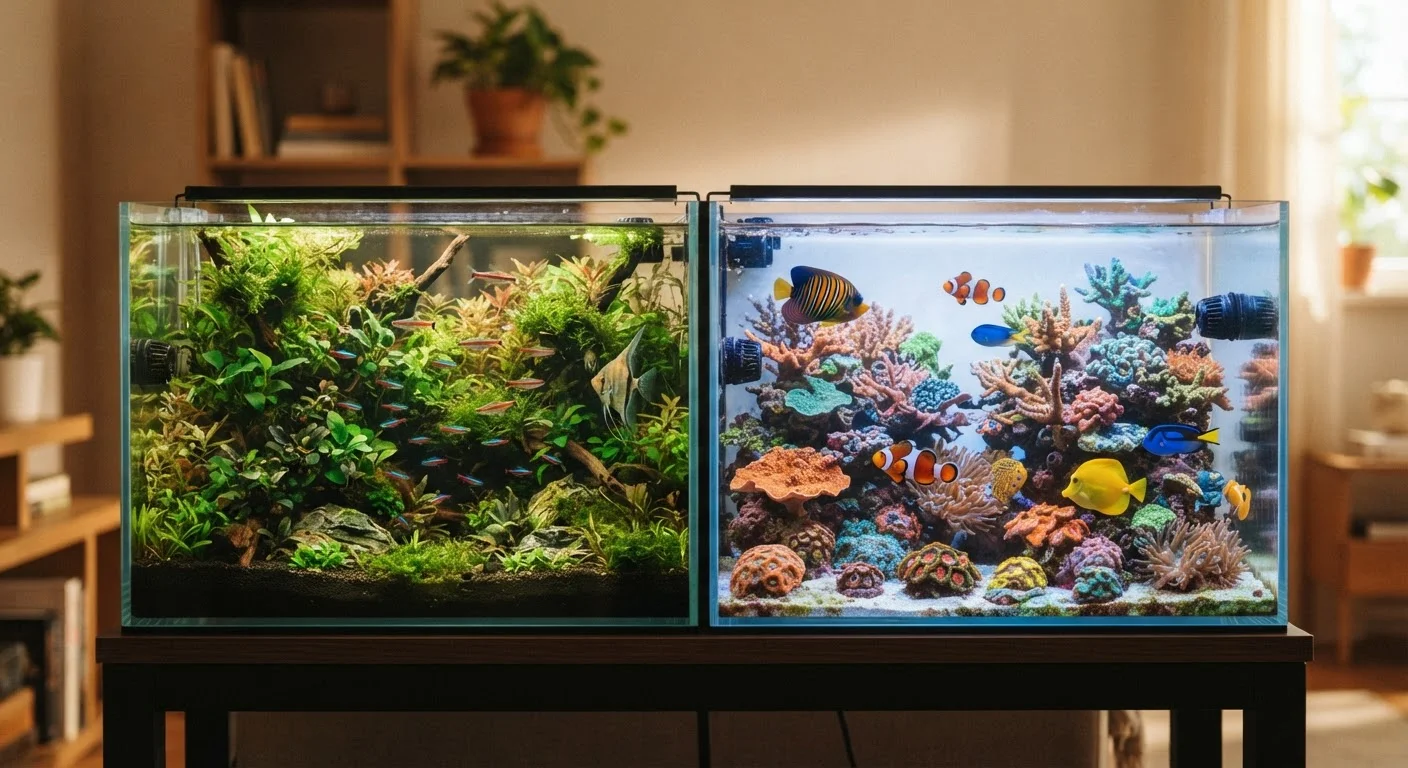
The Core Difference: Complexity and Cost
The most honest thing to say upfront is this: freshwater and saltwater aquariums are not simply different versions of the same hobby — they operate on fundamentally different levels of complexity. A freshwater tank can be set up and maintained by someone with no prior experience. A saltwater tank generally requires research, patience, and a meaningful financial commitment before the first fish ever goes in.
Freshwater systems use — as the name suggests — dechlorinated tap water and house fish that tolerate a relatively wide range of conditions. Goldfish, bettas, guppies, and tetras are all remarkably resilient species that can recover from minor mistakes in water chemistry. This forgiveness is enormously valuable when you're still learning.
Saltwater tanks replicate ocean conditions, which means tightly controlled salinity (measured using a tool called a refractometer), stable pH between 8.1 and 8.3, and often additional equipment like protein skimmers, powerheads for water flow, and high-intensity lighting for coral. Marine fish and invertebrates evolved in one of the most stable environments on Earth — they don't adapt well when conditions shift.
| Criterion | Freshwater Aquarium | Saltwater Aquarium |
|---|---|---|
| Setup cost (20–30 gal) | Relatively low | Significantly higher |
| Water chemistry complexity | Moderate, more forgiving | High, precise control required |
| Equipment required | Filter, heater, basic lighting | Skimmer, live rock, specialized lighting |
| Fish cost | Generally affordable | Often much higher per fish |
| Beginner-friendliness | High | Low to moderate |
| Weekly time commitment | 1–2 hours typical | 2–4+ hours typical |
| Visual diversity | Wide variety of fish and plants | Exceptional — coral, invertebrates, fish |
If you're just getting started, our guide to setting up a fish tank for the first time walks through the cycling process and early decisions that apply equally to both tank types.
Equipment, Maintenance, and What to Realistically Expect
A basic freshwater tank — say, a 20-gallon setup — typically requires a filter, heater, thermometer, water conditioner, a simple test kit, and lighting if you plan to grow live plants. The maintenance routine involves weekly partial water changes (around 20–25% of tank volume), filter cleaning, and occasional substrate vacuuming. Most beginners find a manageable rhythm within a month or two.
Saltwater setups require all of the above plus additional layers. Live rock (porous rock that houses beneficial bacteria and microorganisms) is nearly essential for biological filtration. If you plan a reef tank with coral, you'll need specialized lighting that delivers the right light spectrum — standard aquarium bulbs won't support coral growth. Water changes in saltwater tanks require pre-mixed saltwater, which adds both time and ongoing cost.
2–5×
Higher startup cost for saltwater vs. freshwater
Aquarium hobbyist educators commonly estimate saltwater setups cost two to five times more than comparable freshwater tanks when equipment is factored in.
6–8 weeks
Typical nitrogen cycle duration
Both freshwater and saltwater tanks require a cycling period before fish are added; rushing this step is among the most common beginner mistakes.
Testing in a saltwater tank also goes beyond the basics. In addition to ammonia, nitrite, and nitrate — the standard freshwater tests — marine hobbyists typically monitor calcium, alkalinity, and magnesium levels, especially in reef environments. Testing kits or electronic monitors for these parameters represent a real additional expense.
On a practical level, saltwater fish are also more expensive to purchase. While a healthy freshwater community fish might cost a few dollars, many popular marine species — clownfish, tangs, angelfish — cost considerably more, and losses due to disease or parameter swings hit the wallet harder.
Neither setup demands daily intensive work once established, but saltwater tanks are less forgiving when life gets busy. A skipped water change or a malfunctioning heater in a marine tank can cause rapid deterioration that would take a freshwater tank considerably longer to reach.
Which One Is Right for You?
For most newcomers, the honest recommendation from experienced fish keepers is to begin with freshwater. The skills you build — understanding the nitrogen cycle, reading fish behavior, managing water chemistry — transfer directly to saltwater when and if you choose to make that leap. Many dedicated reef keepers spent years with freshwater tanks first.
That said, if a saltwater tank is genuinely your goal, don't be discouraged — just go in prepared. Start with a tank no smaller than 30 gallons (smaller tanks are actually harder to stabilize in saltwater), research fish-only systems before considering coral, and build your budget conservatively. The hobby rewards patience and preparation.
Freshwater tanks, meanwhile, offer their own quiet rewards: lush planted aquascapes, interesting schooling fish, and the kind of low-stress maintenance routine that fits naturally into everyday life. They're not a consolation prize — they're a legitimate, beautiful hobby in their own right.
Whichever direction you choose, the most important step is the same: take your time with the setup, cycle the tank properly before adding fish, and don't rush. Both types of aquariums thrive when the keeper is patient.