
Why the Conversation Has Gotten More Complicated
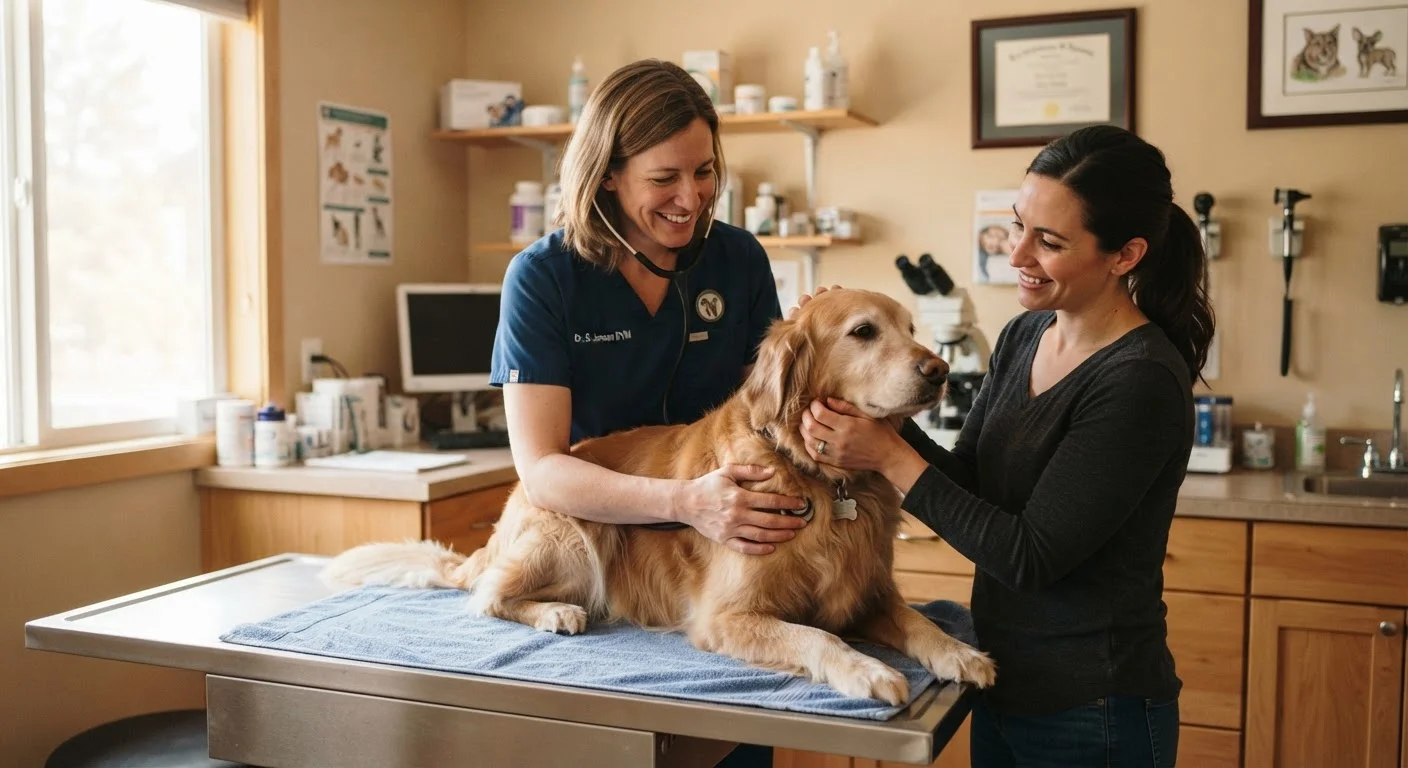
For decades, the standard recommendation was straightforward: spay or neuter your pet around six months of age. That guidance made sense from a population-control standpoint and was generally well-tolerated. But over the past twenty years, a growing body of veterinary research — particularly around large and giant breeds — has encouraged a more individualized approach to both the decision and the timing.
This doesn't mean the procedure is risky or that earlier guidance was wrong. It means veterinary medicine is doing what good science does: refining its understanding. For everyday dog owners, the practical takeaway is that this is a conversation worth having with your vet rather than a box to automatically check off.
A Note on Breed-Specific Research
Much of the newer research on spay/neuter timing has focused on specific breeds — particularly Golden Retrievers, Labrador Retrievers, and German Shepherds. Findings from these studies may not apply equally to all breeds or mixed-breed dogs. When reading about this topic online, it's worth checking whether the study population resembles your own dog before drawing direct conclusions.
The Benefits Are Real and Well-Documented
The case for spaying and neutering is grounded in decades of research across multiple areas of dog health and welfare.
Eliminates risk of ovarian and uterine cancers
Spaying removes the ovaries and uterus, which means conditions like pyometra (a life-threatening uterine infection) and ovarian cancer become impossible. This is a meaningful health benefit, particularly as dogs age.
Greatly reduces mammary tumor risk if done early
Research indicates that spaying before the first or second heat cycle is associated with a significantly lower incidence of mammary tumors, which can be malignant in dogs.
Eliminates testicular cancer in male dogs
Neutering removes the testes entirely, which means testicular cancer — one of the more common cancers in intact older male dogs — cannot develop.
Prevents unwanted pregnancies and reduces overpopulation
This is one of the most consistent and widely agreed-upon benefits, with direct implications for animal shelter capacity and the welfare of dogs born without homes.
May reduce hormone-driven roaming and marking behaviors
Neutering can lessen the drive in male dogs to roam in search of mates and to urine-mark territory, which many owners find practically beneficial for day-to-day life.
Beyond individual health, spaying and neutering is a meaningful tool for reducing pet overpopulation — a genuine welfare concern that affects millions of animals annually in the United States. Shelters consistently report that intact animals contribute disproportionately to unwanted litters, making this a broader community issue as well as a personal one.
The Trade-Offs Are Worth Knowing
More recent research — including studies from the University of California, Davis examining several dozen dog breeds — has identified associations between early gonadectomy (removal of the reproductive organs) and certain health conditions. These findings are genuinely useful to understand, even though they don't overturn the overall case for the procedure.
Early neutering linked to joint disorders in large breeds
Several peer-reviewed studies have found associations between early neutering and increased rates of hip dysplasia, cranial cruciate ligament tears, and other orthopedic conditions in large-breed dogs, possibly related to the role of sex hormones in bone development.
Possible increased risk of certain cancers
Some research has found associations between neutering and higher rates of specific cancers, including hemangiosarcoma and mast cell tumors, in certain breeds. These findings are not universal across all dogs and are still being studied.
Hypothyroidism risk may increase in some dogs
A subset of studies has identified a modest association between spay/neuter and hypothyroidism (underactive thyroid), though this risk varies considerably by breed and individual factors.
Does not reliably fix behavioral problems
Owners who expect neutering to resolve aggression, anxiety, or fear-based behavior are often disappointed. These behaviors are primarily shaped by genetics, socialization, and environment — not hormone levels.
Surgical and anesthetic risks, however small, are real
As with any procedure requiring general anesthesia, spay and neuter surgeries carry a small inherent risk. For most healthy dogs this risk is low, but it is not zero, and age and health status can affect it.
It's worth noting that most of the studies showing increased orthopedic risk focus on large and giant breeds — think Golden Retrievers, German Shepherds, and Labrador Retrievers. For small breeds, the hormonal development window is shorter and the risks appear more limited. Every dog is different, which is exactly why individualized veterinary guidance matters here.
What the Research Says About Behavior
One of the most commonly cited reasons for neutering male dogs is the expectation that it will reduce aggression or difficult behavior. The reality is more nuanced. Neutering can reduce hormone-driven behaviors — roaming, mounting, and urine marking — but it is not a reliable fix for fear-based aggression, resource guarding, or anxiety. Those behaviors are shaped by genetics, environment, and early socialization, not hormones alone.
For female dogs, spaying eliminates heat cycles and associated behavioral shifts, which many owners find practically helpful. But it does not fundamentally change a dog's temperament or personality.
~27%
Reduction in aggression from neutering alone
Research suggests neutering reduces inter-dog aggression in roughly one in four cases, highlighting that it is not a reliable behavioral fix on its own.
Over 3 million
Animals entering U.S. shelters annually
According to the ASPCA, millions of dogs and cats enter U.S. animal shelters each year, underscoring the role spay/neuter plays in population management.
The honest summary: surgery can remove a hormonal layer from certain behaviors, but training, socialization, and environment still do the heavy lifting when it comes to how a dog behaves day to day.
Talking Timing With Your Veterinarian
The emerging consensus in veterinary medicine is that timing should be informed by a dog's breed, size, and individual health profile. For many small and medium breeds, the traditional six-month window remains appropriate. For large and giant breeds, many veterinarians now suggest waiting until skeletal maturity — somewhere between 12 and 24 months — before proceeding, particularly for males.
Alternatives such as vasectomy or ovary-sparing spay (sometimes called a partial spay) preserve hormone production while still preventing reproduction. These options are available through some veterinary practices, though they are not yet mainstream and come with their own considerations.
If you're navigating this decision alongside questions about other aspects of your pet's care, it's worth knowing that the same principle — individualized guidance from a trusted vet — applies broadly across species. The article What Vets Actually Want Small-Pet Owners to Know explores how veterinary guidance often gets lost in translation for small-pet owners specifically.
Whatever you decide, the goal is a conversation — not a checklist.