

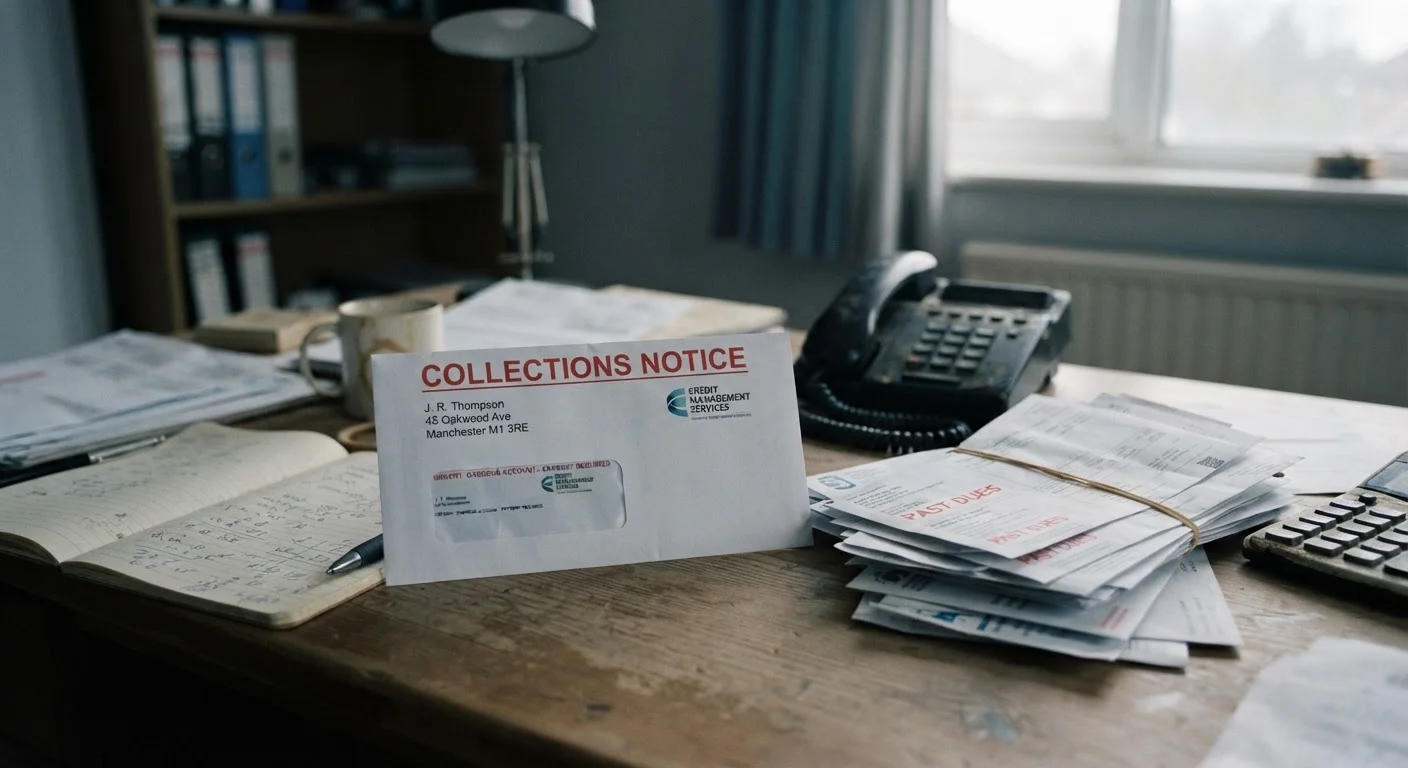
How a Debt Ends Up in Collections
Missing a single payment doesn't immediately send your account to a collector. The process unfolds in stages. First, the original creditor — a credit card issuer, hospital, or lender — will attempt to reach you directly. Expect reminder calls and letters during this phase.
If the account remains unpaid, the creditor will typically charge it off, an accounting term meaning they've written the balance off as a loss on their books. This usually happens around 180 days of non-payment. A charge-off sounds final, but it isn't — the debt is still legally yours. For a fuller explanation of terms like charge-off and default, see our borrower's glossary.
After a charge-off, the creditor has two main options: hire a third-party collections agency to contact you on their behalf, or sell the debt to a debt buyer — often for pennies on the dollar. Either way, the calls and letters will now come from a new name. Understanding the broader landscape of consumer debt can help you put your own situation in context.
Your Rights Under Federal Law
The Fair Debt Collection Practices Act (FDCPA), enforced by the Federal Trade Commission and the Consumer Financial Protection Bureau, sets clear boundaries on what third-party collectors can and cannot do.
The FDCPA Covers Third-Party Collectors Only
The Fair Debt Collection Practices Act applies to third-party collectors — agencies or debt buyers — not to the original creditor collecting its own debt. Some states have their own laws that extend similar protections to in-house collectors, but federal FDCPA rules do not. Check your state attorney general's website to understand what rules apply in your state.
What collectors cannot legally do:
- Call before 8 a.m. or after 9 p.m. in your time zone
- Use abusive, threatening, or profane language
- Claim to be a law enforcement officer or attorney (unless they are)
- Threaten legal action they don't intend to take
- Contact you at work if you tell them your employer prohibits it
- Discuss your debt with most third parties
When a collector first contacts you, they must provide a validation notice — in writing, within five days — stating the amount owed, the name of the creditor, and your right to dispute the debt. If you request written verification within 30 days, collection activity must pause until they respond.
You can also send a written request asking the collector to stop contacting you entirely. They must honor it, with narrow exceptions (such as notifying you of a lawsuit). Know that this doesn't make the debt disappear — it just stops the calls.
How Collections Affects Your Credit
~28%
Americans with debt in collections
According to the Urban Institute, roughly one in four Americans with a credit file has had a debt in collections at some point.
7 years
How long a collection stays on your credit report
The Fair Credit Reporting Act limits most negative entries, including collections, to seven years from the original delinquency date.
180 days
Typical time before a charge-off occurs
Most creditors classify an account as a charge-off after approximately 180 days of missed payments, though timelines vary.
A collection account is a serious negative entry on your credit report. Payment history carries the largest weight in most credit scoring models, and an unpaid collection signals to lenders that you failed to repay a prior obligation.
The damage is heaviest in the months immediately after the account is reported. Over time, the impact softens — but the entry remains visible for up to seven years from the date the original account first became delinquent, per the Fair Credit Reporting Act (FCRA).
One nuance worth knowing: some newer scoring models, including FICO Score 9 and VantageScore 4.0, give less weight to — or entirely ignore — collection accounts that have been paid in full. However, many mortgage lenders and other creditors still use older scoring models that count paid collections. This means paying off a collection may not immediately improve your score as much as you'd expect, though it can still matter when lenders manually review your file.
What You Can Do Next
If a collector contacts you, don't ignore it. Here are practical steps to take:
- Request debt validation in writing. Within 30 days of first contact, write to the collector asking them to verify the debt. Keep a copy and send it via certified mail.
- Check your credit report. Confirm the collection account is accurate. Dispute any errors directly with the credit bureau reporting it. You can access your reports for free at AnnualCreditReport.com.
- Understand the statute of limitations. Each state sets a time limit — the statute of limitations — on how long a creditor can sue you in court to collect a debt. This varies by state and debt type. A debt can still appear on your credit report after this window closes, but your legal exposure to a lawsuit may be reduced.
- Explore your options. Depending on your financial situation, you might pay in full, negotiate a settlement, set up a payment plan, or in serious cases, consult an attorney about bankruptcy. If you carry multiple debts, understanding strategies like the debt avalanche or snowball methods can help you prioritize. You may also want to explore whether debt consolidation makes sense in your situation.
Nonprofit credit counseling agencies — including those affiliated with the National Foundation for Credit Counseling — can provide free or low-cost guidance without a sales motive. For decisions specific to your finances, consult a licensed financial advisor or attorney.
This article is for general informational purposes only and does not constitute personalized financial, legal, or tax advice. Your situation is unique — consult a qualified professional before making decisions about debt repayment or collection disputes.