

Why Budgeting Method Matters
A budget is only useful if you actually follow it. The mechanics — how you assign money, track spending, and handle leftovers — affect whether a system fits your habits or quietly falls apart after two weeks. That's why comparing methods side by side is worth the effort before you commit to one.
It also helps to understand your expenses before choosing a framework. Knowing the difference between fixed and variable costs is foundational — some budgeting approaches handle predictable bills differently than fluctuating spending. And if you carry debt, your budgeting method should leave room for a repayment strategy; see how debt avalanche and debt snowball approaches compare once you have a budget in place.
The Four Major Methods Compared
Here's a structured look at how the four most widely used budgeting approaches stack up across the criteria that matter most to everyday budgeters.
| Zero-Based | 50/30/20 Rule | Pay-Yourself-First | Envelope Method | |
|---|---|---|---|---|
| Ease of Setup | High effort | Low effort | Low effort | Moderate effort |
| Time to Maintain Monthly | 30–60+ minutes | Under 15 minutes | Under 10 minutes | 15–30 minutes |
| Best Income Type | Stable, salaried | Stable or near-stable | Any income type | Stable or cash-preferred |
| Savings Prioritization | Built in deliberately | 20% target set | Automated first | Depends on setup |
| Spending Flexibility | Low — every dollar assigned | Moderate — broad buckets | High — spend what's left | Low — hard category limits |
| Beginner-Friendly | No | Yes | Yes | Moderate |
| Debt Payoff Focus | Strong — line-item control | Built into 20% bucket | Add-on after saving | Possible with envelope |
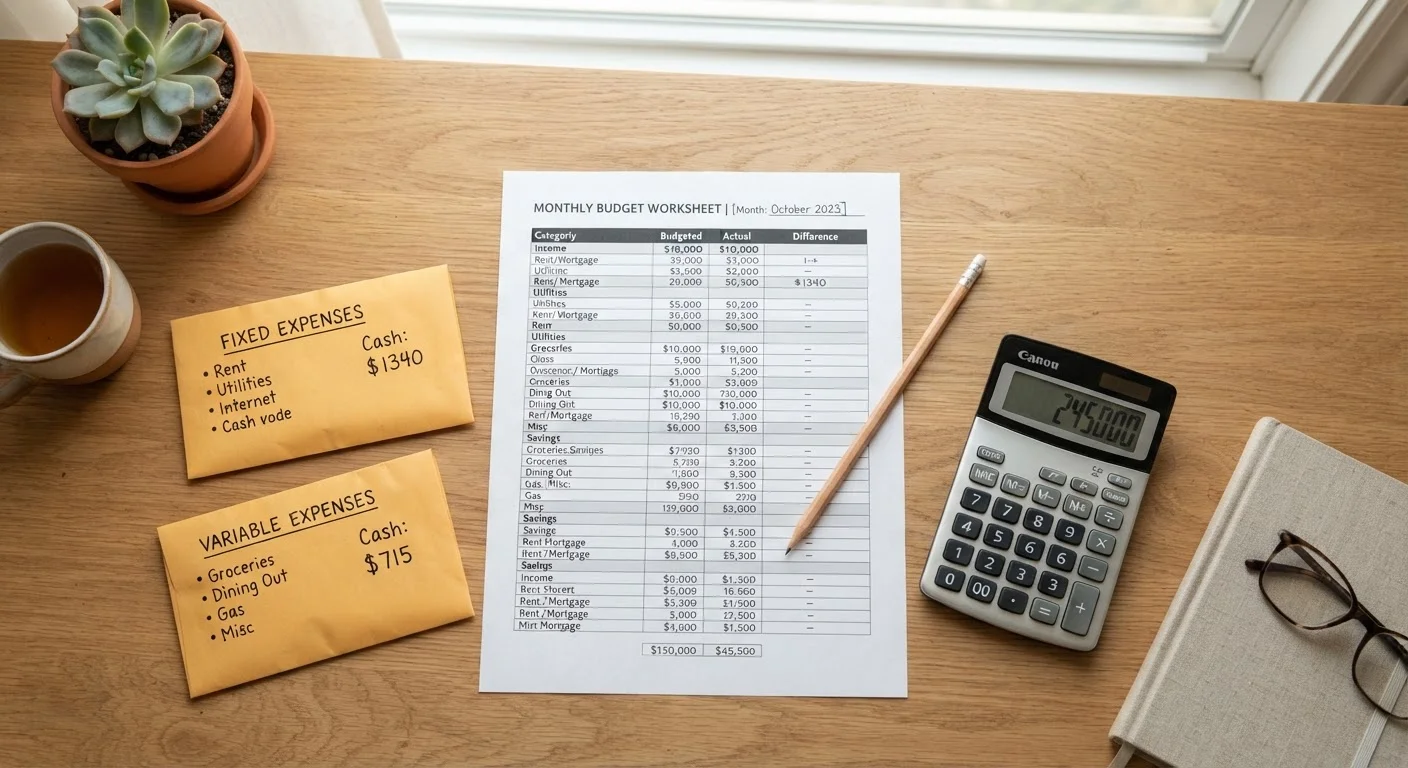
Each method has a different entry point. Zero-based budgeting starts with income and works every dollar down to zero — not meaning you spend it all, but that every dollar is assigned a purpose, including savings. The 50/30/20 rule divides take-home pay into three broad buckets: 50% for needs, 30% for wants, and 20% for savings or debt repayment. Pay-yourself-first moves a set savings amount out automatically on payday, then you spend what's left however you choose. The envelope method allocates physical (or digital) cash into category-specific envelopes; when an envelope is empty, spending in that category stops.
Who Each Method Suits Best
Zero-Based Budgeting
Best for people with stable, predictable income who want granular control. It's time-intensive — expect 30–60 minutes per month minimum to build and maintain. It's less practical if your income varies month to month; budgeting on an irregular income requires a different baseline approach.
50/30/20 Rule
A strong starting point for budgeting beginners. The three-category structure is easy to grasp and doesn't demand meticulous tracking. Its weakness: in high-cost cities, needs alone can exceed 50% of income, making the split unrealistic without adjustment.
Pay-Yourself-First
Ideal for people who know they should save more but keep spending before they get around to it. Automating the savings transfer removes willpower from the equation. The trade-off is that it offers little structure for the remaining spending — you could still overspend on discretionary categories.
Envelope Method
Works well for cash-preferred spenders or anyone who needs a hard stop on specific problem categories like dining out or entertainment. Digital envelope apps can replicate this system without physical cash.
Common Pitfalls and How to Avoid Them
Switching methods too often is one of the most common reasons budgets fail — not the method itself. Give any approach at least two to three full months before deciding it isn't working. Many perceived failures are actually adjustment periods.
Another pitfall: ignoring irregular expenses like car registration, medical copays, or annual subscriptions. Whichever method you use, build a sinking fund — a small monthly set-aside — for expenses you know will arrive but can't predict exactly when. This applies to all four approaches. And if you've been telling yourself that budgeting just doesn't work for someone like you, it may be worth examining common budgeting myths that might be shaping that belief.
Mixing Methods Is Allowed
You don't have to pick just one approach and follow it rigidly. Many people use pay-yourself-first as their savings foundation and then apply envelope-style limits to two or three spending categories where they tend to overspend. Hybrid approaches can offer the benefits of multiple systems without their individual weaknesses.
This article is for general informational purposes only and does not constitute personalized financial advice. For guidance tailored to your situation, consider consulting a licensed financial professional.