
Your Score Moved — But You Didn't Do Anything
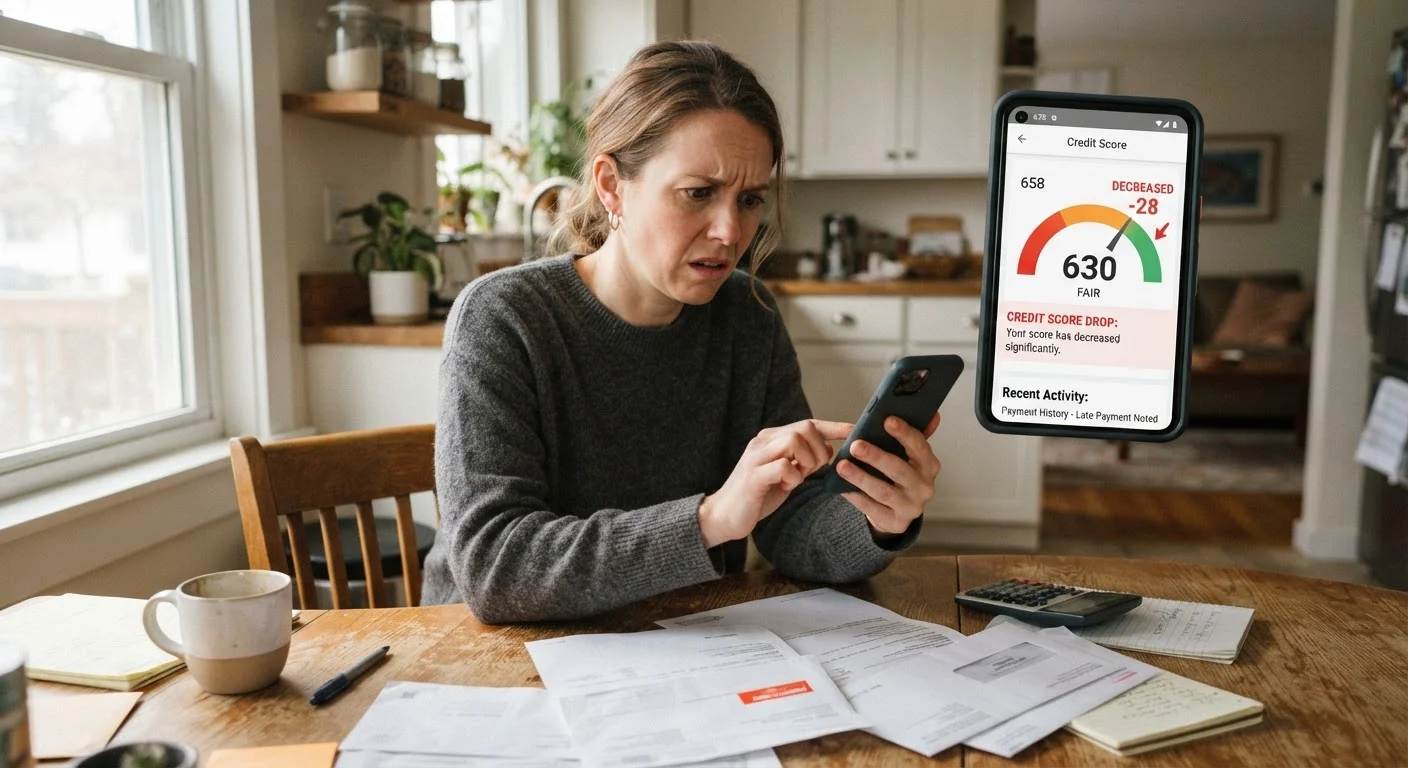
You pay your bills on time. You haven't applied for anything new. You haven't missed a payment in years. And yet, you log in one day and your credit score is five, ten, maybe twenty points lower than last month. What happened?
The frustrating truth is that credit scores are dynamic calculations, not static grades. They respond to a constant stream of data — some of it driven by your actions, a lot of it driven by lender behavior, algorithmic updates, and account changes that you may not have initiated or even noticed. Understanding the actual mechanics helps you stop blaming yourself and start identifying the real cause.
This article walks through the most common reasons a score drops without an obvious trigger, and what each one signals about your credit profile. For a deeper look at how to read the underlying data, see Reading Your Credit Report Without Getting Lost.
The Most Common Hidden Culprits
Most unexplained score drops trace back to one of a handful of recurring patterns. Knowing how to recognize them is half the battle.
Assuming a closed account only affects your score if you closed it yourself.
Why it happens: Many people don't realize that lenders can close inactive accounts without notice, and that the closure still affects credit age and available credit calculations regardless of who initiated it.
Overlooking how a balance carried on one card can spike your utilization ratio even when overall debt is stable.
Why it happens: Scoring models evaluate utilization both overall and per individual card. A single card pushed above 30% of its limit can lower your score even if other cards have zero balances.
Not realizing that becoming an authorized user on someone else's account can lower your score if their account deteriorates.
Why it happens: Being added as an authorized user is often recommended as a way to build credit, but if the primary account holder misses payments or maxes out the card, that negative history can appear on your report too.
Ignoring the score impact of multiple hard inquiries within a short window outside of rate-shopping exceptions.
Why it happens: Consumers often apply for several credit cards in a short period — sometimes in response to promotional offers — without knowing that each application generates a hard inquiry that scoring models may treat as a signal of financial stress.
Missing that a paid-off installment loan can briefly lower a score by reducing account mix diversity.
Why it happens: Paying off a car loan or personal loan feels like a clear win, but scoring models factor in the variety of account types you're actively managing. Losing an installment account can narrow that mix and cause a temporary dip.
One often-overlooked factor is the relationship between credit utilization and your score. If a lender quietly lowers your credit limit — which they can do without your approval — your utilization ratio rises even if your balance is identical to last month's. The scoring model sees higher risk, and your score reflects that.
It's also worth separating myth from reality here. Many people believe that checking their own credit hurts their score, or that carrying a small balance is better than paying in full. Credit Myths That Cost People Real Money addresses both of these directly.
Don't Assume a Drop Means Identity Theft
While an unexplained score drop can sometimes signal fraudulent activity, most drops have mundane explanations: a balance increase, a closed account, or a limit reduction. Jumping to conclusions can lead to unnecessary panic or hasty decisions. Start by reviewing your full credit reports methodically before assuming the worst. If you do find accounts you don't recognize, that's when to take swift action through your bureau's fraud alert process.
What to Do After an Unexplained Drop
The first step is always to pull your credit reports — not just your score. Reports from the three major bureaus (Equifax, Experian, and TransUnion) are available free at AnnualCreditReport.com. Compare what changed between reporting periods: new accounts, closed accounts, balance shifts, or inquiries you don't recognize.
If you spot an error — a balance reported incorrectly, a payment marked late that wasn't, or an account that isn't yours — you have the right to dispute it with both the bureau and the original creditor. The Consumer Financial Protection Bureau (CFPB) maintains guidance on how that process works.
If the drop is accurate and reflects a real change, the next step is understanding the recovery timeline. Most score dips from utilization changes or minor inquiries correct themselves within one to three billing cycles once the underlying data updates. Building the habits that prevent these situations from recurring matters more than any single fix — Habits That Protect Your Credit Score Over the Long Run outlines what that looks like in practice.
This article is for general informational purposes only and does not constitute personalized financial or credit advice. For guidance specific to your situation, consider consulting a nonprofit credit counselor or a licensed financial professional.