
What You're Really Comparing
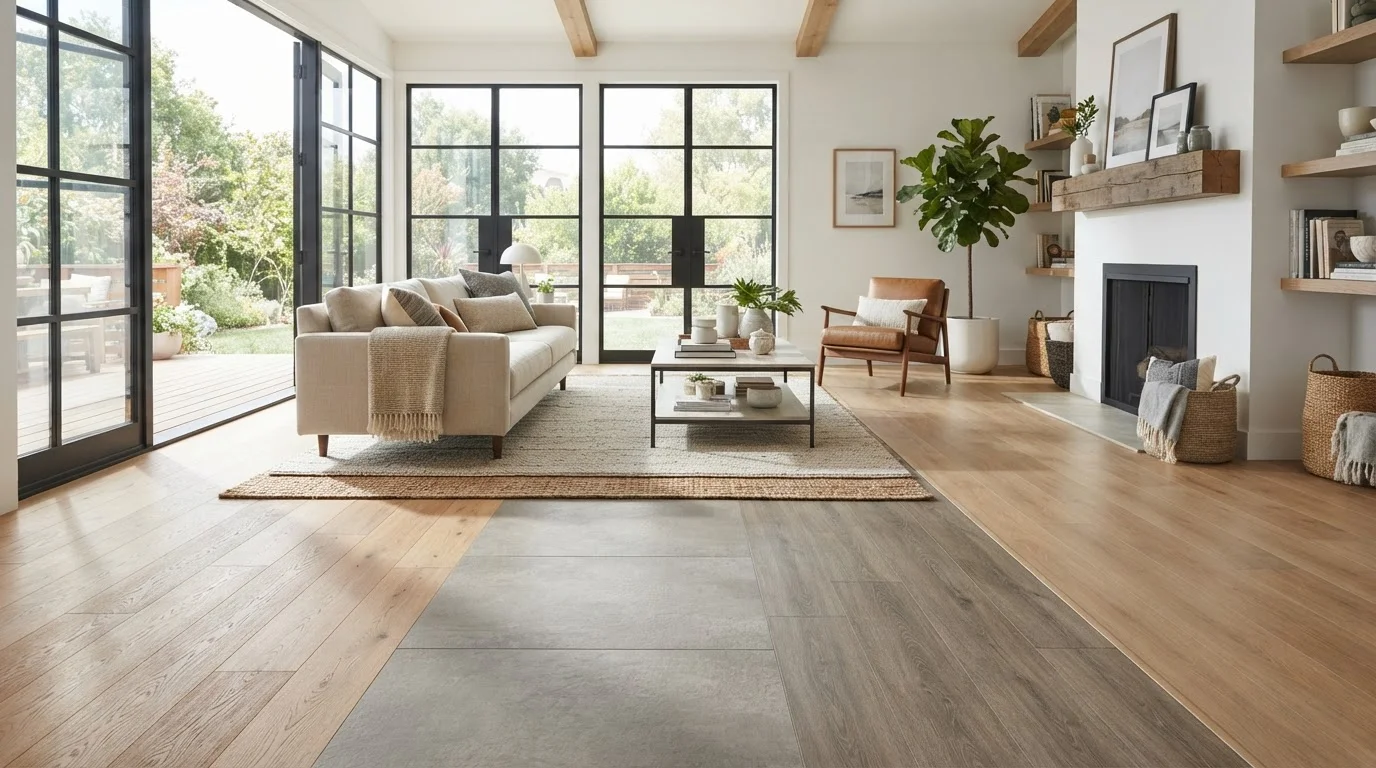
Choosing a floor isn't just about looks — it's about matching a material to the realities of your home: how wet a space gets, how much foot traffic it handles, what your subfloor looks like, and what your budget allows. This comparison covers four of the most common residential flooring materials: solid or engineered hardwood, luxury vinyl plank (LVP), ceramic or porcelain tile, and laminate. Each has real strengths and genuine drawbacks worth understanding before you commit.
Side-by-Side: How Each Material Compares
The table below measures each flooring type across the criteria that matter most for everyday homeowners. Use it as a starting framework, then dig into the section-by-section details below.
| Hardwood | LVP | Tile | Laminate | |
|---|---|---|---|---|
| Lifespan | 50–100 years | 15–25 years | Decades with care | 10–25 years |
| Moisture Resistance | Poor | Excellent | Excellent | Poor |
| Can Be Refinished | Yes, multiple times | No | No | No |
| Typical Material Cost | Higher | Moderate | Moderate–High | Lower |
| DIY Friendly | Moderate | Yes | Challenging | Yes |
| Comfort Underfoot | Warm, natural | Moderate with pad | Hard and cold | Moderate with pad |
| Best Room Fit | Living/dining rooms | Any room | Wet rooms, kitchens | Dry rooms only |
Durability and Lifespan
Hardwood is the long-game choice. Solid hardwood can last 50–100 years when properly maintained, and the ability to sand and refinish the surface multiple times means scratches and dents don't have to be permanent. Engineered hardwood offers similar surface character with better dimensional stability across humidity swings, though it can only be refinished a limited number of times depending on the veneer thickness.
LVP has improved dramatically. Modern LVP with a 12-mil or thicker wear layer holds up well under heavy traffic and pet claws. Most quality LVP carries 15–25 year residential warranties, though the core cannot be refinished — replacement is the only fix for deep damage.
Tile is genuinely hard to beat for durability. Porcelain tile in particular is denser and less porous than ceramic, resisting chips and moisture for decades. Grout lines are the weak point — they require periodic sealing and cleaning to stay intact and sanitary.
Laminate typically lasts 10–25 years, depending on wear-layer thickness and how carefully it's maintained. It cannot be refinished, and once moisture penetrates the core, the boards swell and warp irreversibly.
Moisture Resistance
Moisture tolerance is often the deciding factor — especially in kitchens, bathrooms, laundry rooms, or basements.
- Hardwood: Poor moisture tolerance. Solid hardwood is not recommended below grade or in rooms with frequent spills. Engineered hardwood is more stable but still not waterproof.
- LVP: Excellent. The vinyl core is 100% waterproof (though standing water under poorly sealed seams can still reach the subfloor over time).
- Tile: Excellent. Tile itself is impervious to water; the grout and installation quality determine overall moisture performance.
- Laminate: Poor. Even water-resistant laminate products should not be exposed to standing water or installed in wet rooms.
Installation, Cost, and Comfort
Cost varies widely by region, grade, and labor, so treat these as general ranges rather than guarantees. Hardwood typically carries the highest material and installation cost. Tile installation is also labor-intensive, especially for large-format or intricate layouts, and requires a solid, level subfloor. LVP and laminate both offer floating-floor installation methods that make DIY installation more accessible to confident homeowners.
Comfort underfoot is worth factoring in for rooms where you stand for long periods. Tile is hard and cold without radiant heat. Hardwood has a natural warmth. LVP and laminate both benefit from underlayment, which adds cushion and noise reduction.
Subfloor requirements differ too. Tile demands a flat, rigid subfloor — often requiring cement board. LVP tolerates minor imperfections better than most. Hardwood may require nail-down or glue-down application depending on subfloor type and grade level.
Making the Final Call
Before choosing, walk through these questions:
- Is the room at or below grade? If yes, eliminate solid hardwood and standard laminate.
- How much daily moisture or humidity does this space see? Wet rooms point to tile or LVP.
- Do you want the option to refinish in 15–20 years? Only hardwood gives you that path.
- Is this a DIY installation? LVP and laminate are the most accessible for non-professionals.
- What's the budget for materials and labor? Laminate is typically lowest cost; hardwood and tile installation typically cost more.
Once you have honest answers to those questions, the right material tends to surface naturally. The goal isn't the most expensive floor — it's the right floor for how your household actually lives.