

Why Bag Fees Change the Math on Cheap Tickets
A $79 fare looks attractive until you add two checked bags for a round trip and discover the real cost is $159 or more. This gap between advertised price and out-of-pocket cost is one of the most common budget surprises in domestic travel — and it's entirely avoidable with a bit of upfront research.
Baggage fee structures differ substantially across carriers. Legacy carriers typically charge a flat fee per bag per direction, while ultra-low-cost carriers often charge for carry-ons as well. Fees also shift based on how you pay — airport check-in counters almost always cost more than prepaying online. For families or groups traveling together, those per-person, per-bag charges multiply fast.
This is why any honest fare comparison must include bags. As we detail in our guide to overlooked travel budget items, baggage fees sit alongside resort fees and airport transfers as costs that quietly inflate a trip's total — but unlike those, you can plan around them systematically.
What You Need Before You Start
Before estimating your bag costs, gather a few pieces of information. These will make the steps below faster and more accurate.
What you will need
Step-by-Step: Estimating and Reducing Your Bag Costs
Follow these steps each time you're comparing fares or preparing to book. Building this into your booking routine takes under 30 minutes and can save you a meaningful amount per trip.
Look up each airline's current bag fee schedule
Before comparing fares, navigate directly to the baggage fee page on each airline's website — not a third-party aggregator. Note the fee for the first and second checked bag, per person, per direction. Record whether fees differ by fare class (basic economy often has stricter rules) and whether prepaying online is cheaper than paying at the airport.
Calculate the all-in fare for each option
Take the base fare for each airline and add the applicable bag fees for your entire group, both directions. For example: two travelers, one checked bag each, round trip, at $35 per bag per direction adds $140 to the base fare. Build a simple table or note on your phone to compare true totals side by side rather than advertised fares alone.
Check whether your travel credit card covers bag fees
Many co-branded airline credit cards include one free checked bag per ticketed passenger when you book with that card. Review the benefits of any travel card you hold — if a card waives the first bag fee for you and a companion, that can reduce your all-in cost by $70–$140 on a round trip. Note that benefits typically require you to book directly with the airline using that card.
Assess whether your packing can fit carry-on limits
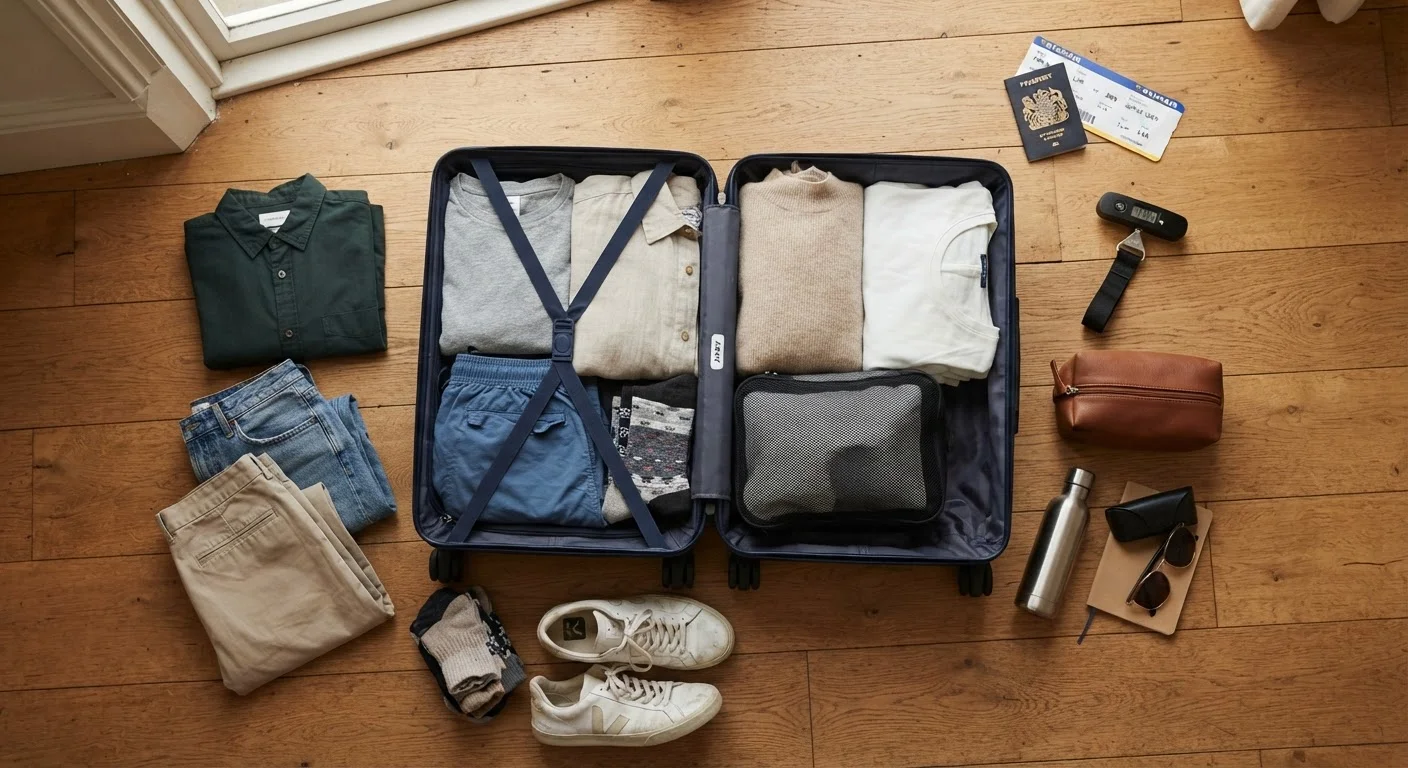
Check the carry-on size and weight limits for each airline you're considering — they differ. If your bag fits within carry-on dimensions, you may eliminate checked bag fees entirely. Weigh and measure your bag before the airport. For longer trips or travel with gear (sports equipment, car seats, strollers), checked bags may be unavoidable, but for shorter trips, strategic packing can make a real difference.
Prepay for bags online if you're checking luggage
If you've determined you need to check a bag, prepay at the time of booking or through the airline's website before your travel day. Airport check-in counters frequently charge a higher rate for the same bag. Confirm the prepayment appears in your booking confirmation so you have a record if any discrepancy arises at the airport.
Once you've worked through these steps, your total travel cost estimate will be far more accurate than a headline fare alone. Pair this process with our pre-trip booking checklist to catch any remaining hidden costs before you commit.
Build a Bag Fee Line Into Every Budget
Treat bag fees as a fixed travel budget line item, the same way you'd budget for airport parking or ground transport. When you're planning any trip, add your estimated bag costs to your total before you evaluate whether a fare is genuinely affordable. This habit prevents the most common form of fare-comparison error and gives you an accurate baseline for every trip you plan.
When Bag Fees Make Flying Less Competitive
For short-to-medium domestic routes, checked bag fees can tip the balance toward driving — particularly for families hauling gear. If you're weighing that trade-off, our road trip vs. flying cost comparison walks through how to run those numbers honestly, including gas, tolls, and travel time.
The broader takeaway is that transportation decisions are rarely about the sticker price alone. Fare alerts and price-lock tools — covered in detail in our comparison of fare alert and price-lock strategies — help you track the base fare, but only matter if you're also accounting for the full cost of getting on that plane. Bags are one of the biggest pieces of that puzzle, and now you have a repeatable process to handle them.
This article is for general informational purposes only. Baggage fees, policies, and airline rules change frequently — always verify current fee schedules directly with your carrier before booking. Prices and availability are not guaranteed.