

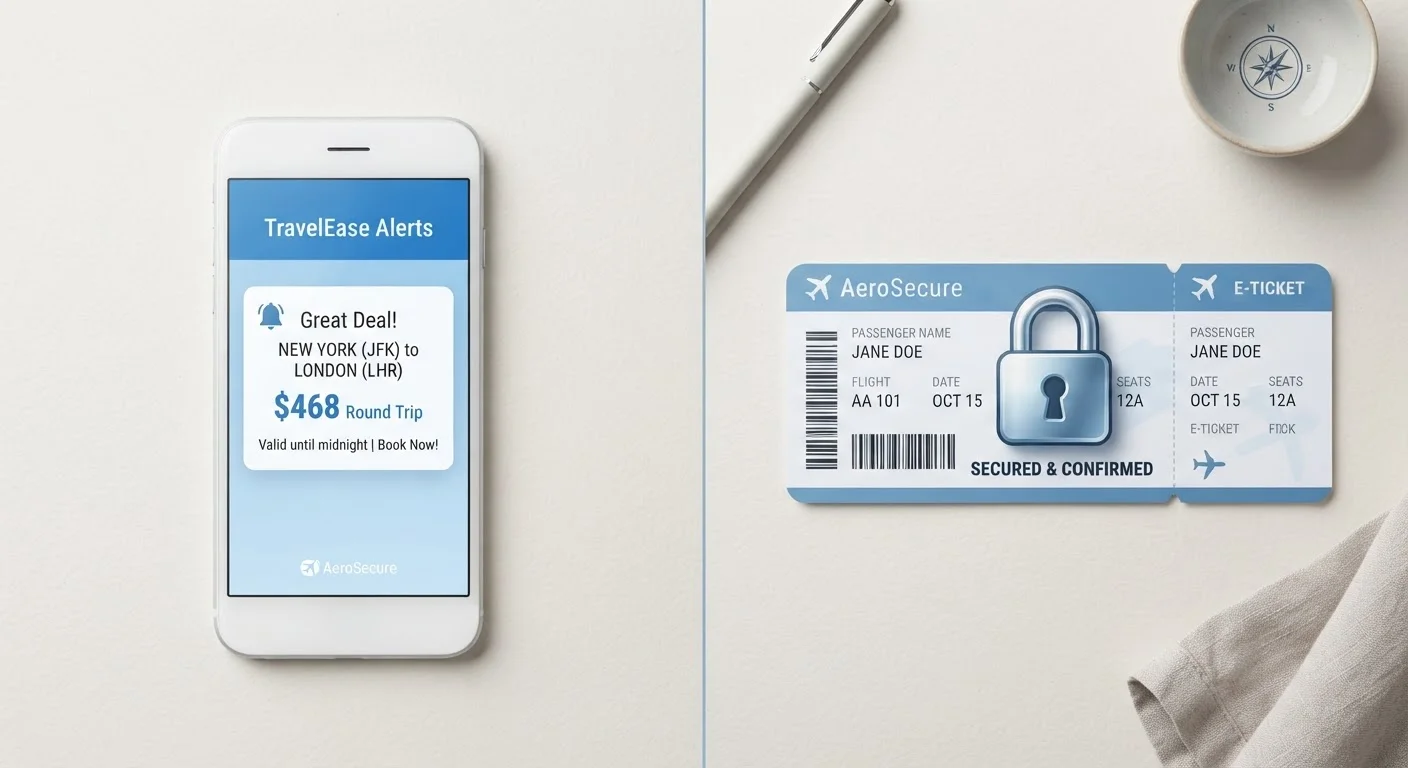
How Each Tool Actually Works
Before comparing value, it helps to understand the mechanics. Fare alerts are notifications — usually via email or app push — triggered when a flight price crosses a threshold you set or when a significant drop occurs on a route you're watching. Most major flight search platforms offer them for free. You receive the alert, check if the fare still exists, and book directly with the airline or platform.
Price-lock tools work differently. They allow you to reserve a specific fare for a defined window — commonly 24 to 72 hours, occasionally longer — so the price won't increase while you decide. Some platforms offer short locks for free as a courtesy; others charge a fee ranging from a few dollars to roughly $30 depending on the route and lock duration. If you book within the window, you pay the locked fare. If you don't book, you typically forfeit the lock fee but owe nothing more.
Both tools address the same underlying anxiety: flight prices move constantly, and committing too early or too late can cost real money. As our editorial team has explored in our look at advance booking timing, the "book early" rule isn't universal — which is exactly why monitoring tools matter.
Side-by-Side: Key Differences
Comparing these tools head-to-head makes the trade-offs clearer. Neither is universally superior — they solve different problems.
| Criterion | Fare Alerts | Price-Lock Tools |
|---|---|---|
| Cost | Free on most platforms | Free to ~$30 depending on route |
| What it does | Notifies you of price changes | Holds a specific fare temporarily |
| Response required | Must act quickly when alerted | Decide within the lock window |
| Best booking timeline | Weeks to months out | 24–72 hours before committing |
| Flexibility needed | High — dates/routes may need to shift | Low — works with fixed dates |
| Risk | Deal may disappear before you book | Fare may drop further after locking |
| Ideal traveler | Solo or flexible travelers | Groups or fixed-date travelers |
One pattern worth noting: fare alerts reward patience and flexibility, while price-lock tools reward decisiveness with a safety net. If you tend to deliberate before booking — especially when coordinating with others — a lock may prevent a frustrating price jump. If you're a solo traveler who can book on short notice, alerts often deliver value at zero cost.
Where Each Tool Falls Short
Fare alerts have a real limitation: speed. A price drop notification may arrive minutes or hours after the fare changed — and by the time you open the email, the deal may be gone. This is especially common during flash sales or error fares, which can disappear within minutes. Alerts also require you to be ready and available to act, which isn't realistic for everyone.
Price-lock tools have their own catch: the fee. Even if the price drops further after you lock it, you're committed to the locked rate unless the tool allows downward adjustment (most don't). You could theoretically lock a fare, watch it fall another $80, and still pay the original locked price plus the lock fee. That's a losing outcome — though a relatively rare one if you've done reasonable research first.
It's also worth remembering that many popular fare-saving tactics don't deliver what they promise. Both alerts and locks are legitimate tools, but neither eliminates the need to understand how airline pricing works in the first place.
Getting the Most From Either Approach
The travelers who benefit most from fare alerts tend to use them alongside flexible-date search tools. Shifting a departure by even a day or two often matters more than catching a specific price drop. Our guide to flexible-date search tools explains how to use these features effectively.
For price-lock tools, the smartest approach is to have already done your research. Know the typical fare range for your route before you lock — that way you can judge whether the locked price is actually good, not just lower than a peak you happened to catch. Also confirm the lock terms: how long the window is, whether the fee is refundable, and whether the locked fare covers taxes and fees or just the base fare.
Finally, resist the temptation to treat either tool as a substitute for a clear plan. As we've covered in our piece on the risks of booking everything in one session, rushing decisions under price pressure often creates bigger problems down the line. Use these tools to reduce pressure — not to manufacture urgency.
This article is for general informational purposes only. Flight prices, tool availability, and fee structures vary by platform and change frequently. Always verify current terms directly with the platform before making any booking decisions.