

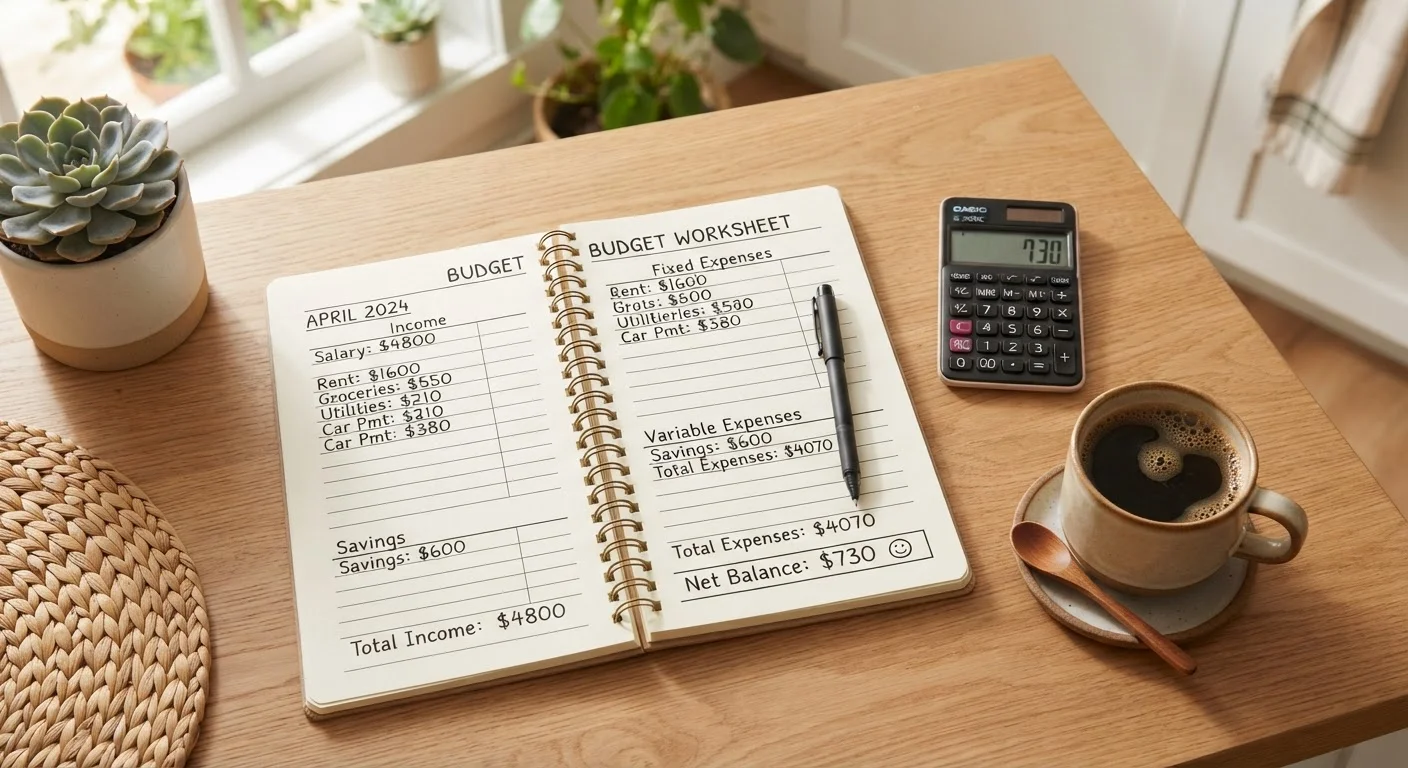
Why a Household Budget Actually Works
A budget is simply a written plan for your money. It tells your dollars where to go before the month begins, rather than leaving you wondering where they went afterward. Research from the Consumer Financial Protection Bureau consistently shows that households with a spending plan report feeling more in control of their finances — regardless of income level.
If you've tried budgeting before and it didn't stick, the problem is rarely willpower. More often, the budget was built on incomplete information or unrealistic targets. This guide walks you through each stage — from counting income to keeping the plan alive month after month. Before diving in, it helps to speak the language: our plain-language glossary of personal finance terms explains concepts like discretionary income and net cash flow so nothing gets lost in translation.
You don't need to earn more to benefit from a budget. You need a clear picture of what you have and a deliberate plan for how to use it.
Step 1: Calculate Your Real Monthly Income
Income tracking starts with one rule: use take-home pay (the amount deposited in your account after taxes and deductions), not your gross salary. Using pre-tax figures is one of the most common budgeting mistakes — it produces a plan you can't actually fund.
List every reliable income source: wages, freelance or gig earnings, child support or alimony received, rental income, and any regular government benefits. For variable income — where your monthly pay changes — use a conservative estimate, such as your lowest paycheck from the past three months. It's easier to have money left over than to scramble for a shortfall.
If you have irregular income, build your budget around your lowest realistic monthly figure. Any extra that comes in becomes a bonus you can direct deliberately — toward debt, savings, or a periodic expense fund.
Budgeting to an average or optimistic income figure means you'll regularly fall short. Planning conservatively prevents shortfalls and removes the stress of variable pay cycles.
Create a single 'irregular expenses' category and deposit a set amount into it monthly. When car registration or a dental bill arrives, the money is already waiting.
Periodic expenses are the most common cause of budget blow-ups because they feel unexpected even when they aren't. Pre-funding them eliminates the disruption entirely.
Add up all monthly sources to get your total household income baseline. This single number is the foundation everything else is built on.
Step 2: Map Out Your Expense Categories
Most household expenses fall into three types:
- Fixed expenses — same amount every month: rent or mortgage, loan payments, insurance premiums, subscriptions.
- Variable necessities — required but fluctuating: groceries, utilities, gas, medical co-pays.
- Periodic expenses — infrequent but predictable: car registration, annual insurance premiums, holiday gifts, back-to-school costs.
Periodic expenses are where most budgets silently fail. Divide each annual or semi-annual bill by 12 and set that amount aside monthly so it doesn't ambush you. For vehicle-related costs — from fuel to unexpected repairs — understanding what routine upkeep actually costs is essential; our car maintenance resource hub offers practical context for budgeting those line items.
Before finalizing your categories, use a spending tracker setup checklist to make sure you're capturing your full financial picture. Building a budget around incomplete expense data is like navigating with a partial map.
Don't Skip Irregular Expenses
Expenses that hit once or twice a year — vehicle registration, annual insurance premiums, holiday gifts — are real costs even when they're not on this month's statement. Leaving them out of your budget will cause a shortfall when they arrive. Divide each by 12 and budget for them every month.
Step 3: Set Spending Targets and Financial Goals
Once you know your income and expense categories, assign a spending target to each category. A widely referenced starting framework — sometimes called the 50/30/20 guideline — suggests roughly 50% of take-home pay toward needs, 30% toward wants, and 20% toward savings and debt repayment. Treat these as a reference point, not a rigid rule. Your actual ratios will depend on your cost of living, debt load, and goals.
Financial goals belong inside the budget as a line item, not as an afterthought. Whether you're building an emergency fund (a standard recommendation is three to six months of essential expenses), paying down a credit card, or saving toward a vehicle purchase, give each goal a monthly dollar amount. Savings that aren't scheduled tend not to happen.
Once your targets are set, verify the math: total income minus total allocated expenses and savings should equal zero — every dollar assigned a purpose. This is sometimes called a zero-based budget.
Step 4: Track Spending and Adjust Monthly
A budget written once and never revisited stops working within weeks. Track actual spending against your targets throughout the month — apps, spreadsheets, or even a notebook all work. What matters is consistency, not the tool.
At month's end, compare planned versus actual for each category. Overspent on groceries? Identify why before the next month — was the target too low, or did spending habits drift? Underspent? Redirect that surplus toward a goal rather than letting it disappear. This monthly review process is what separates a budget that works from one that just looks good on paper.
Budgeting myths — like the idea that it requires a high income or no social life — can silently undermine motivation. Our examination of common budgeting myths addresses the most persistent ones head-on.
Keeping Your Budget on Course Over Time
Life changes — a raise, a new baby, a job loss, a move. Your budget should change with it. Schedule a fuller review at least quarterly to revisit category targets, update income figures, and reassess goals. Monthly check-ins catch small drifts; quarterly reviews catch structural mismatches.
The households that maintain a budget long-term tend to do so through specific habits and routines, not sheer motivation. Our companion piece on budgeting habits that stick walks through those patterns in detail.
A few principles that hold up over time: automate savings transfers so they happen before you can spend the money; keep a small buffer in your checking account to absorb minor surprises without derailing the plan; and resist the urge to abandon the budget after a hard month. Adjust it — don't scrap it.
This article is for general informational and educational purposes only and does not constitute personalized financial, tax, or legal advice. For guidance specific to your situation, consult a qualified financial professional.