
The Core Trade-off: Freedom vs. Shared Experience
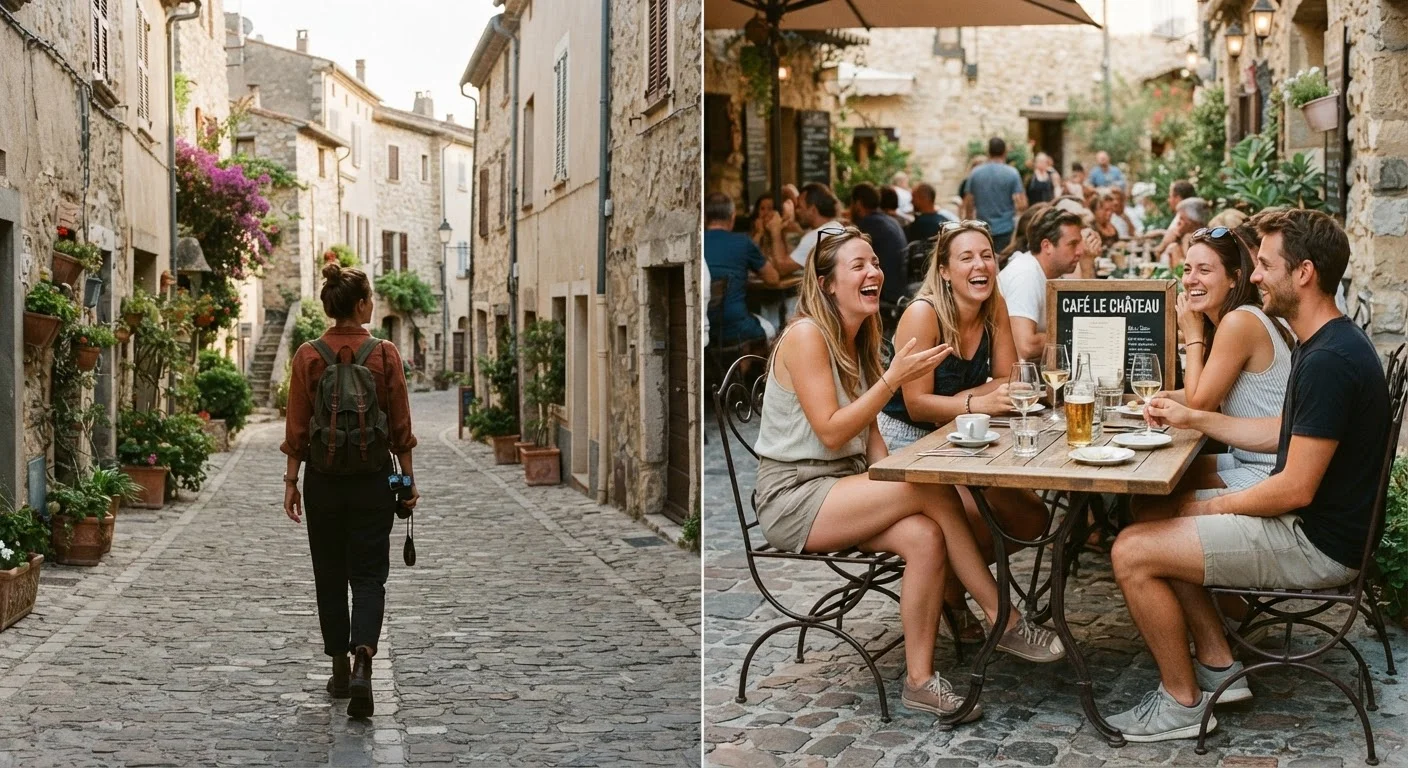
Every travel decision starts with a fundamental question: do you want to answer only to yourself, or do you want to share the experience? Solo travel places every choice — where to eat, how long to linger at a museum, whether to take a spontaneous detour — entirely in your hands. Group travel redistributes those decisions across multiple people, which creates friction but also connection.
Neither dynamic is inherently superior. A solo trip to Japan can feel deeply rewarding for someone who processes experiences internally; that same itinerary can feel isolating for someone who draws energy from shared moments. Conversely, a group trip to Portugal can be joyful for a social traveler and exhausting for someone who needs regular solitude. Knowing which category describes you — not ideally, but honestly — is the most useful starting point.
It's also worth noting that travel style doesn't have to be all-or-nothing. Many travelers build hybrid trips: flying solo to a destination, then joining a small-group day tour or activity. This approach preserves independence while creating low-pressure social opportunities. For a deeper look at pacing decisions that interact with this choice, see our guide to slow travel trade-offs.
Cost Reality: Who Actually Pays More?
The financial picture is more nuanced than most travelers expect. Solo travelers routinely absorb single-supplement charges on hotel rooms — paying 80–100% of the double-occupancy rate for a room sized for two. Dining alone can also mean more expensive per-meal costs when dishes designed for sharing aren't available. Rental cars, private transfers, and vacation rentals all become proportionally pricier without someone to split them with.
Group travelers benefit from cost-sharing across nearly every category: accommodation, transportation, cooking-focused rentals, and often negotiated group rates on tours and activities. However, group travel introduces its own hidden costs — group dinners at restaurants chosen by committee, activities you might have skipped, or itinerary padding that extends the trip length and budget.
| Solo Travel | Group Travel | |
|---|---|---|
| Schedule flexibility | Complete — change plans anytime | Limited — requires group consensus |
| Per-person cost | Higher — single supplements, no cost-sharing | Lower — shared accommodation and transport |
| Safety support network | Self-reliant — requires more preparation | Built-in — others present if issues arise |
| Social connection | Self-initiated — meet locals or no one | Ready-made — shared experiences with travel partners |
| Planning responsibility | Entirely yours — high control, high load | Shared — collaborative but requires coordination |
| Personal growth opportunity | High — self-reliance builds confidence | Moderate — shared decisions reduce stretch moments |
| Suitable for first-time international travelers | Possible with preparation | Generally easier — built-in guidance and support |
If budget efficiency is your primary driver, group travel usually wins on raw per-person cost — but only if the group's preferences align closely enough to avoid constant compromises that add unplanned spending. For broader strategies on stretching your travel dollars regardless of style, travel savings for first-timers covers the fundamentals.
Safety, Logistics, and Planning Load
Solo travelers carry the full weight of logistical preparation — research, bookings, contingency planning, and in-the-moment problem-solving all fall on one person. That can be empowering or overwhelming depending on temperament. For destinations where safety requires more careful planning (unfamiliar cities, remote areas, regions with language barriers), traveling alone demands a higher baseline of preparation: sharing itineraries with someone at home, knowing local emergency contacts, and building in check-in routines.
Group travel distributes that mental load across participants and provides an immediate support network if something goes wrong — a missed connection, a medical issue, or a lost bag is far less stressful when others are present. This is a meaningful advantage for travelers who are newer to international destinations or less confident navigating unfamiliar systems.
The logistical complexity of group travel, however, scales rapidly with group size. Coordinating flights, accommodation preferences, dietary needs, and daily schedules for even four people is a substantive project. See our guide to group travel planning for proven frameworks that reduce that friction significantly.
Personality Fit: Matching Travel Style to How You're Wired
Research on travel satisfaction consistently points to the same insight: the travelers who report the most positive experiences are those whose travel style matches their social energy preferences, not those who chose the objectively "better" option. A few honest diagnostic questions can help clarify which style fits better for a given trip:
- Do you recharge through solitude or social interaction? Introverts often find group itineraries draining; extroverts may find solo travel lonely after day two.
- How do you handle uncertainty? Solo travel involves more unscripted moments. If ambiguity creates anxiety rather than excitement, group structure may be more comfortable.
- What's your decision-making style? People who find group consensus frustrating are poor candidates for large-group travel, regardless of the cost savings.
- What's the purpose of this specific trip? A restorative solo weekend and a celebratory group reunion serve completely different needs.
It's also worth considering how your transportation choices interact with travel style. Solo travelers generally have more flexibility with transport options — for a clear breakdown of those decisions, road trip vs. flying trade-offs is a useful companion read.