

Why the Timing of Your Trip Changes Everything
Most travelers think in two modes: peak season (when everyone wants to go) and off-season (when almost nobody does). But there's a third window that often delivers the most value — shoulder season. Understanding it is one of the most straightforward ways to stretch your travel budget without sacrificing experience.
The concept is simple: every destination has periods of high demand, low demand, and the transition stretches in between. Those in-between periods are shoulder seasons. They're not a secret, but they are frequently overlooked by travelers who default to holiday weeks, school breaks, or peak summer dates without considering the cost and crowd implications.
For budget-conscious American travelers, learning to recognize shoulder season — and plan around it — is a foundational skill. It's part of the broader trip planning mindset that separates reactive bookings from intentional ones.
How Shoulder Season Affects Prices and Crowds
Demand drives travel pricing. When hotels and airlines know seats and rooms will fill regardless, they price accordingly. When demand softens — even slightly — competitive pressure brings prices down. Shoulder season is typically that softening point.
20–30%
Typical hotel rate reduction in shoulder vs. peak season
Travel industry analyses commonly cite this range for popular international destinations, though variation by market is significant.
15–25%
Average airfare savings during shoulder periods
Fare comparison data from multiple booking studies suggests meaningful but variable savings when flying outside peak demand windows.
2–4 weeks
Typical length of a shoulder season window
The transitional period between peak and off-peak varies widely, but most destinations have recognizable shoulder stretches of a few weeks on either side of peak.
Beyond price, crowd levels have a real impact on trip quality. Long lines at major attractions, fully booked restaurants, and overrun beaches are peak-season realities. Shoulder season often means shorter waits, more availability, and a more authentic feel at popular destinations — simply because the volume of visitors is lower.
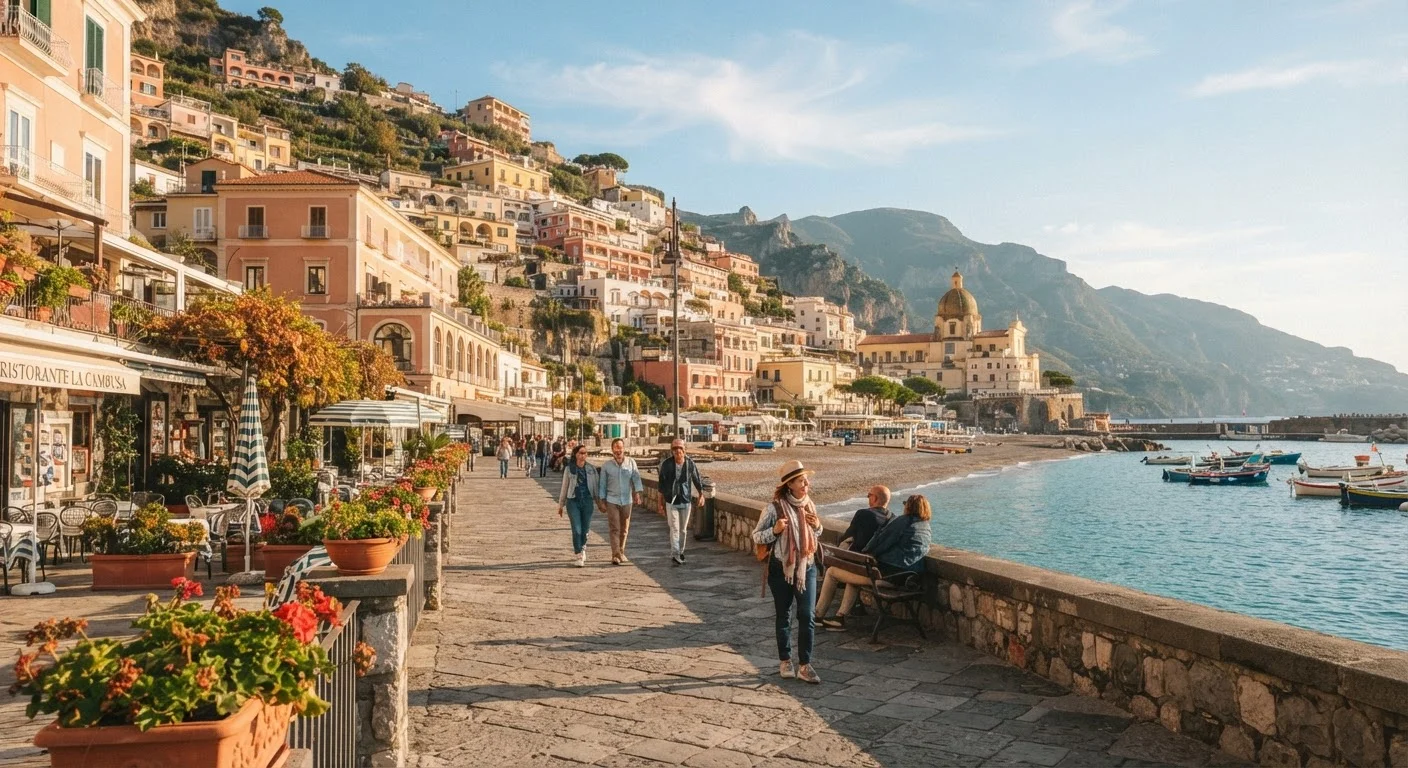
That said, savings during shoulder season are not uniform. A destination that attracts both summer vacationers and fall-foliage seekers may see only a brief dip between the two waves. Others — like many Southern European coastal towns — see a sharper drop in October once the summer crowd clears. The pattern is destination-specific.
The Weather Trade-off You Need to Understand
Shoulder season's appeal comes with a practical caveat: weather. Peak seasons exist partly because conditions are at their most reliable. Shoulder months often bring more variability — afternoon rain, cooler evenings, or occasional storms depending on the region.
This doesn't mean shoulder season weather is bad — it means it's less predictable. A week in Portugal in late September is often beautiful. The same week could also bring rainy stretches. Travelers who can adapt to some weather uncertainty are better positioned to benefit from shoulder timing.
Packing strategies matter here. Being prepared for shifting conditions — a light rain layer, versatile layers, comfortable walking shoes — makes shoulder season far more manageable. Smart pre-trip preparation is especially valuable when conditions aren't guaranteed.
Shoulder Season in Practice: Domestic and International Examples
Shoulder season looks different depending on where you're going. Here are a few illustrative patterns to build your mental framework:
- US National Parks: Summer is peak. May and September–October are classic shoulder windows — trails are hikeable, facilities are open, and visitor volumes drop noticeably from July highs.
- Caribbean islands: Peak runs December through April (dry season). Late April and early December often represent short shoulder windows before hurricane season or after it ends.
- Western Europe: Summer is peak. April–May and September–October offer milder crowds and softer pricing in cities like Paris, Rome, and Barcelona, while most attractions remain fully operational.
- Florida beach destinations: Two peak periods — winter (northern snowbirds) and summer (families). Spring and fall offer shoulder pricing in between.
The common thread: shoulder season is about understanding the specific demand cycle of your destination, not applying a universal calendar. For travelers weighing broader cost decisions — including whether to fly or drive — comparing the real costs of road trips vs. flying adds another useful layer to the planning process.
Making Shoulder Season Work for Your Trip
The practical steps are straightforward. Start by identifying your destination's peak season — local tourism boards, travel forums, and hotel pricing calendars are all useful signals. Then look at the months immediately before and after that peak window and compare airfare and accommodation rates. A meaningful price gap is a strong indicator you've found the shoulder period.
Flexibility is your biggest asset. Travelers with rigid dates — set by school calendars, major holidays, or fixed work schedules — have less ability to shift into shoulder windows. But even partial flexibility, like traveling a week earlier or later than a holiday peak, can yield noticeable differences in both cost and experience.
If you're newer to building a travel budget from scratch, a foundational guide to budget travel strategies provides a helpful starting framework. And for travelers considering longer, more immersive trips, the slow travel approach pairs naturally with shoulder season timing — fewer days lost to logistics, more value per dollar spent.
Shoulder season isn't a hack or a loophole. It's simply the result of understanding how travel demand cycles work — and planning around them deliberately.